


 Faster Analysis, Better Route Reconstruction, and Expanded Vehicle Evidence Recovery
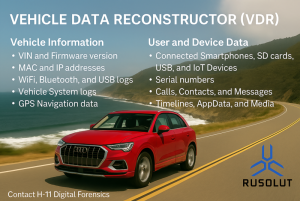
The latest Vehicle Data Reconstructor (VDR) 2026Q2 update is more than just another database refresh. While new vehicle support is always welcome, this release focuses on something investigators value even more: finding evidence faster, understanding it more clearly, and presenting it more effectively.
Several of the new capabilities directly address common challenges faced during vehicle examinations, from route reconstruction and connected device analysis to acquisition validation and report generation.
Better Route Reconstruction and Mapping
One of the most significant additions in VDR Report Manager 4.0 is the introduction of offline maps for GNSS analysis.
Investigators can now visualize GNSS fixes, review tracks, and reconstruct routes directly within the platform. Even better, map snapshots can be embedded directly into reports, making it easier to document vehicle movement and present findings to investigators, prosecutors, and courts. Instead of manually creating screenshots and exporting maps from multiple tools, route evidence can now be incorporated directly into the reporting process.
Enhanced Connected Device Analysis
Vehicles often contain valuable evidence about the smartphones and devices that have interacted with the system. The new release expands Connected Devices reporting by adding device serial numbers and last-connected timestamps when available. These details can help investigators identify specific devices, establish timelines, and correlate vehicle activity with mobile device evidence obtained from other sources. In many investigations, proving which device was connected—and when—can be just as important as recovering the data itself.
Improved Calls and Messages Analysis
The Calls and Messages categories have received significant improvements. As modern vehicles continue to integrate with smartphones and communication services, call logs, message activity, and related artifacts can become valuable investigative leads. Enhanced parsing and presentation of these artifacts helps investigators locate relevant evidence more quickly and understand how vehicle occupants interacted with connected devices.
Faster Processing and Workflow Improvements
One of the most practical enhancements in this release is performance. Rusolut reports that embedded file system package generation can now be up to 10 times faster in selected cases. For laboratories processing multiple vehicle examinations, reducing waiting time means more time spent analyzing evidence and less time waiting for data preparation.
The platform also now launches VDR Report Manager automatically after package generation, creating a more streamlined workflow from acquisition to analysis.
Better Visibility into Physical Acquisitions
The 2026Q2 release introduces several enhancements designed to give examiners greater insight into the acquisition process. New ECC maps are now available for NAND memory cases, providing additional visibility into error correction processing. eMMC physical acquisitions now include visual read-map tracking, allowing investigators to better understand acquisition progress and memory accessibility.
Partition detection and scanning algorithms have also been improved across supported file systems, helping examiners identify and process data more efficiently. For investigators working with low-level vehicle memory extractions, these enhancements provide additional confidence and transparency throughout the acquisition process.
Expanded Vehicle and Telematics Support
The VDR database continues to grow with support for numerous new infotainment and telematics platforms. This release introduces support for systems used in vehicles from:
- Mercedes-Benz / Hyundai / Kia / Jaguar / Land Rover / Peugeot / Citroën
- Ford / Suzuki / Nissan / Renault / Dacia / Volkswagen / Seat / Skoda
- Cupra / Honda / Toyota
New Acquisition Modules Expand Investigative Capabilities
Rusolut has also introduced three new acquisition modules (6, 7, and 8) for Vehicle Data Reconstructor. The new modules provide acquisition support for:
- Panasonic MIB1 infotainment systems with navigation
- TechniSat/Preh MIB2 infotainment systems with navigation
- Harman Uconnect VP3 infotainment systems with navigation
These additions expand support for many commonly encountered Volkswagen Group and Dodge-family vehicle platforms, giving investigators additional opportunities to recover evidence from systems that previously required more complex acquisition methods.
The best forensic software updates are not measured by the number of features added. They are measured by how much easier they make an investigator’s job. The VDR 2026Q2 update delivers meaningful improvements in four critical areas:
- Better route reconstruction and visualization
- Enhanced device attribution and artifact analysis
- Faster processing and reporting workflows
- Expanded vehicle, telematics, and acquisition support
For agencies already performing vehicle forensic examinations, these enhancements can help reduce analysis time, improve reporting quality, and increase the amount of evidence recovered from modern vehicles.
Rusolut has published the complete list of enhancements included in Vehicle Data Reconstructor 2026Q2, Rusolut Platform 11.1, and Report Manager 4.0. Learn more about the update and explore the full release details from Rusolut.